Editorial note: This first look is based on the film’s public festival materials and is published ahead of its November premiere. We’ll revisit the film after its screening.
Vanishing Time starts from an idea that already contains its own clock: at the U.S.–Mexico border, “vanishing time” names the span in which a person can cross and blend into the local population. Zoe Valery carries that phrase to Calle 24 in San Francisco, where shop windows and passing reflections become a meeting point for migration, surveillance, and the daily work of belonging.
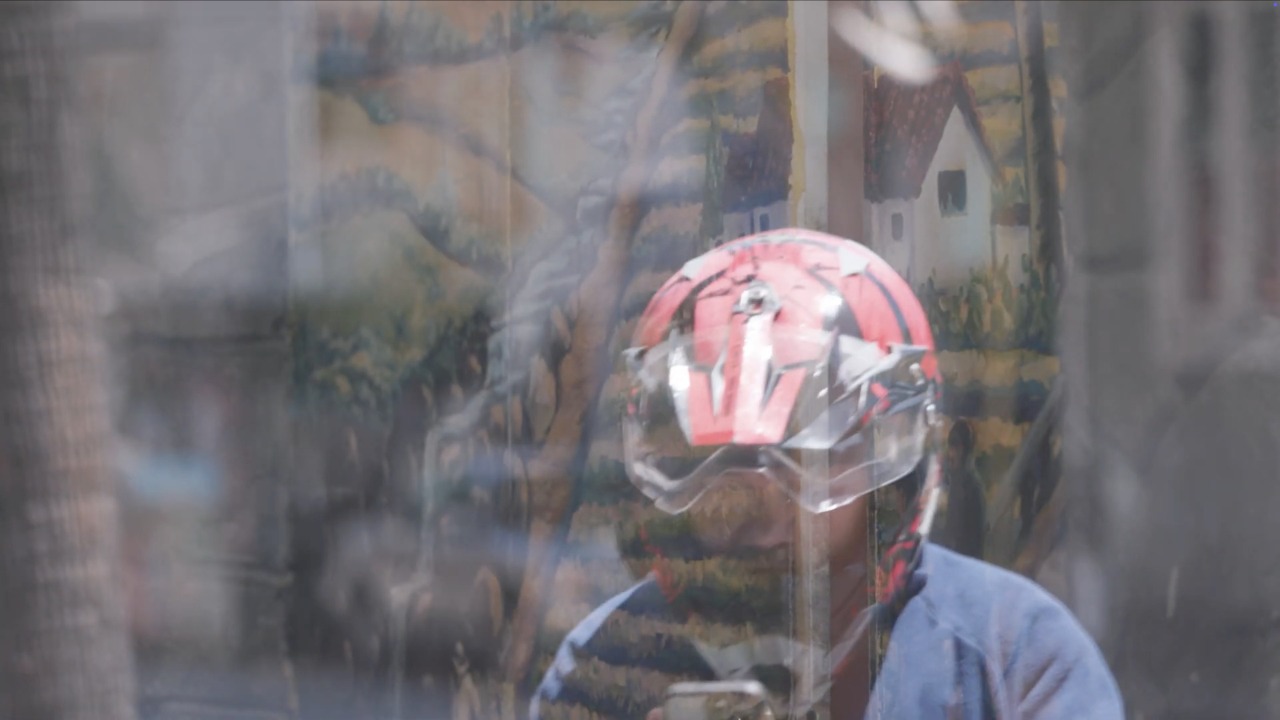
The film’s formal choice is its argument. Shooting through glass lets the street arrive with a second surface between the camera and its subjects. A reflection can make someone visible while also breaking them into fragments; a mural can hold a community’s image in public even as policy makes that community feel newly precarious. The connection between muro, muralla, and mural is more than a clever wordplay. It gives Valery a visual language for asking who gets to be seen, who gets read as belonging, and who can be made to disappear in plain sight.
There is a risk in building a short around such a neatly stated concept: the image can end up illustrating the thesis instead of opening it. The promise here is that the reflections are not abstract decoration. They are taken from a real neighborhood whose layers of language and public art complicate the simple idea of a city as either safe haven or threat. Valery’s background as a Venezuelan-Mexican filmmaker brings the question close without turning the film into a biography of the director.
At eleven minutes, the short has room for a precise visual essay rather than a broad survey. Its attention to surfaces suggests a film willing to let a street carry the argument. If that restraint holds through the whole piece, Vanishing Time could be one of DOC NYC’s most formally distinct shorts this year: politically alert, but interested in how a city looks back at the people moving through it.
DOC NYC lists the film for a U.S. premiere on November 11, with online screenings running through November 29. It previously screened in the Guanajuato International Film Festival’s 2026 international short competition. That November date is a U.S. premiere, not its first screening; the distinction matters, and the festival trail gives the short a useful next chapter.

